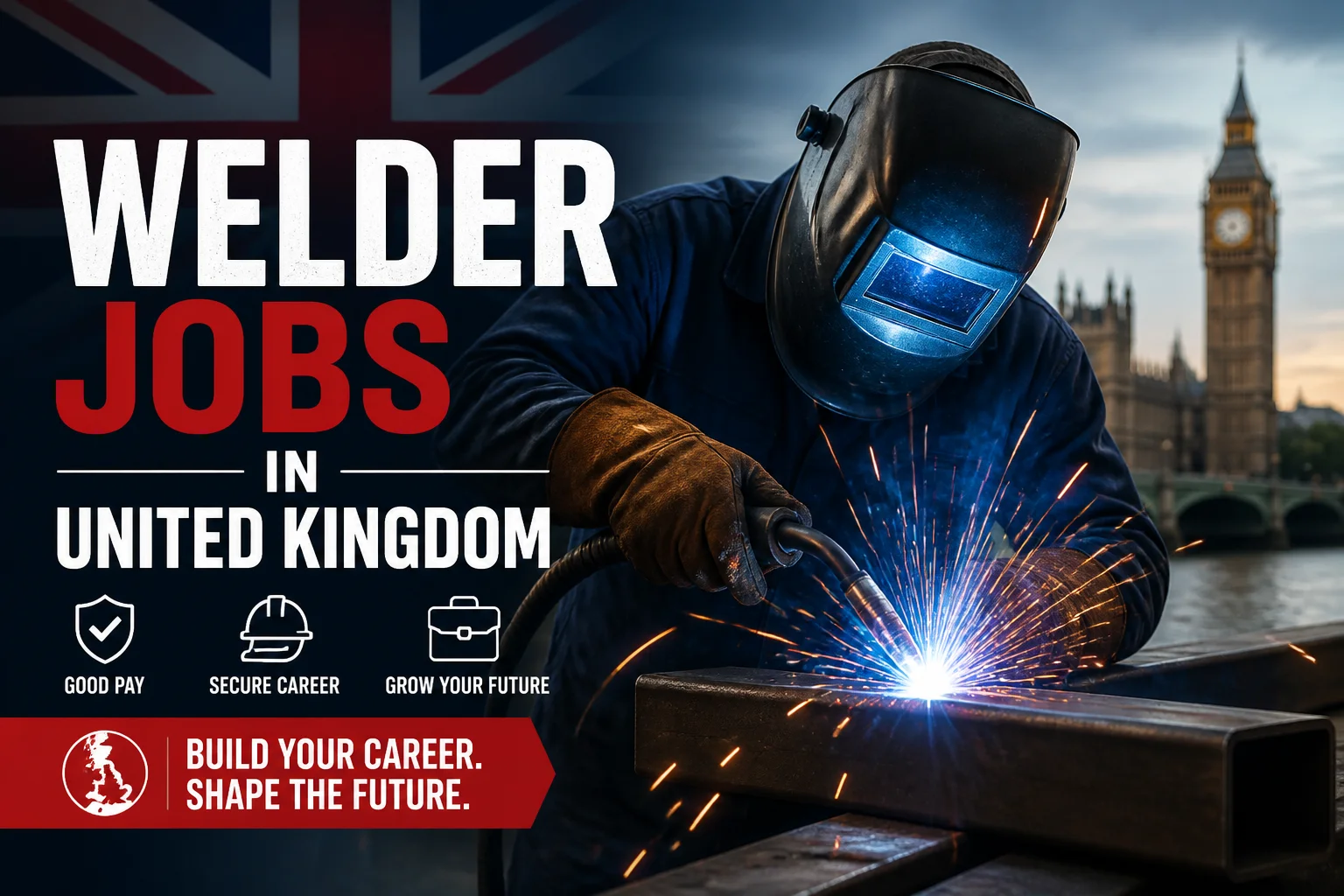
Shop Fitter/ Welder
Company
CB&I Careers
Location
Houston, TX
Job Type
Full-time
Via
CB&I
Apply On
Job Description
Company Overview
CB&I® is the world’s leading designer and builder of storage facilities, tanks and terminals. With more than 60,000 structures completed throughout our 135+ year history, we have the global expertise and strategically-located operations to provide customers world-class storage solutions for even the most complex energy infrastructure projects.
Overview
Welds together metal components of products, as specified by layout, blueprints, diagram, work order, welding procedures, or oral instructions, using electric arc-welding equipment. Lays out, Positions, Aligns and fits together Fabricated parts.
Responsibilities
• Lays out, positions, aligns and fits together fabricated parts of structural metal products in shop according to blueprint and layout specifications, preparatory to welding or riveting.
• Plans sequence of operation, applying knowledge of geometry, effects of heat, and allowance for weld shrinkage, machining and thickness of metal.
• Sets up face block, jigs and fixtures.
• Locates and marks centerlines and reference points onto floor or face block and transposes them to work piece, using tape, chains, plumb bob, and squares.
• Moves parts into position, manually or by hoist or crane.
• Removes high spots and cuts bevels, using hand files, portable grinders and cutting torch. Straightens warped or bent parts.
• Positions or tightens braces, jacks, clamps, ropes, or bolt straps or bolt parts in positions for welding or riveting.
• Responsible for observing and complying with all safety and project rules, including wearing required personal safety equipment. Performs other duties and activities as required.
• Interpret engineering drawings and specifications to plan layout, assembly, and welding operations with precision.
• Lay out, position, and secure parts and assemblies using measuring tools such as straightedges, calipers, and rulers.
• Perform tack-welding and full welding on components in flat, vertical, horizontal, and overhead positions, including under pre-heat conditions.
• Cut and shape metal workpieces using powered oxy-fuel hand torch and other shop tools.
• Install and repair fabricated parts into assemblies, ensuring structural integrity and alignment.
• Remove surface imperfections using grinders, scrapers, and other finishing tools to meet quality standards.
• Select appropriate welding equipment and methods based on material properties and job requirements.
• Maintain a clean and safe work environment, including sweeping floors, removing hazards, and organizing tools.
• Manually guides electrode or gun along weld line, maintaining length of arc and speed of movement to form specified depth of fusion and bead, as judged from color of metal, sound of weld, and size of molten puddle.
• Obtains specified electrode and inserts electrode into portable holder or threads consumable electrode wire through portable welding gun.
• Connects cables from welding unit to obtain amperage, voltage, slope, and pulse, as specified by Welding Engineer.
• Starts power supply to produce electric current.
• Strikes arc which generates heat to make and deposit metal from electrode to work piece and join edges of work piece.
• Welds in flat, horizontal, vertical, or overhead positions.
• Examines weld for bead size and other specifications.
• May manually apply filler rod to supply weld metal.
• May clean or degrease weld joint or work piece, using wire brush, portable grinder, or chemical bath.
• May repair broken or cracked parts and fill holes. May prepare broken parts for welding by grooving or scarfing surfaces.
• May chip off excess weld, slag, and spatter, using hand scraper or power chipper. May preheat work piece, using hand torch or heating furnace.
• May position and clamp work pieces together or assemble them in jig or fixture. May tack assemblies together.
• May cut metal plates or structural shapes.
• May be designated according to type of equipment used as Welder, Carbon Arc (welding); Welder, Flux-Cored Arc (welding); Welder, Gas-Metal Arc (welding); Welder, Gas-Tungsten Arc (welding); Welder, Hand, Submerged Arc (welding); Welder, Plasma Arc (welding); Welder, Shielded-Metal Arc (welding).
• May operate other machine shop equipment to prepare components for welding.
• May be required to pass employer performance tests or standard tests to meet certification standards of governmental agencies or professional and technical associations.
• Responsible for observing and complying with all safety and project rules, including wearing required personal safety equipment. Performs other duties and activities as required.
JOB REQUIREMENTS
• Performing only those jobs on which they have been trained and/or authorized.
• Working in accordance with safe job practices and complying with company safety rules
• Using required personal protective equipment
• Reporting unsafe conditions or practices
• Making safety suggestions
• Serving on the safety committee if requested
• Cooperating during investigation of any accidents that occur
• Taking an active part and participating in safety meetings, pre-job safety briefings, task hazard analyses and Job Safety Analyses.
Local Requirements
Physical Demands:
NP=Not Present, O=Occasionally (0-33%), F=Frequently (34-66%), C=Constantly (67-100%)
Standing
F
Walking
F
Sitting
O
Crouching
F
Bending
F
Balancing
O
Climbing
O
Stooping
O
Crawling
O
Reaching
F
Handling
F
Fingering
F
Lifting (lbs.)
Carrying (lbs.)
Pushing/Pulling (lbs.)
0-10 lbs.
F
0-10 lbs.
F
0-10 lbs.
O
10-20 lbs.
F
10-20 lbs.
F
10-20 lbs.
O
25-50 lbs.
O
25-50 lbs.
O
25-50 lbs.
O
50-100 lbs.
NP
50-100 lbs.
NP
50-100 lbs.
NP
100+ lbs.
NP
100+ lbs.
NP
100+ lbs.
NP
Qualifications
May require a high school diploma or its equivalent and previous years of related experience.
Has knowledge of commonly-used concepts, practices, and procedures within a particular field.
Relies on instructions and pre-established guidelines to perform the functions of the job.
Works under minimum supervision.
Skills and Behaviors
• Adaptability and Agility to learn and contribute in varying and complex environments
• Advanced Self-Awareness and Interpersonal skills
• A consistently developing Business and Technical Acumen coupled with a drive to achieve results
• Computer Skills:
• Communication Skills: Ability to effectively verbally communicate directions from craft supervisors and respond to questions from managers and fellow workers.
• Mathematical skills: Ability to apply concepts such as fractions, percentages, ratios, and proportions to practical situations
CB&I® is the world’s leading designer and builder of storage facilities, tanks and terminals. With more than 60,000 structures completed throughout our 135+ year history, we have the global expertise and strategically-located operations to provide customers world-class storage solutions for even the most complex energy infrastructure projects.
Overview
Welds together metal components of products, as specified by layout, blueprints, diagram, work order, welding procedures, or oral instructions, using electric arc-welding equipment. Lays out, Positions, Aligns and fits together Fabricated parts.
Responsibilities
• Lays out, positions, aligns and fits together fabricated parts of structural metal products in shop according to blueprint and layout specifications, preparatory to welding or riveting.
• Plans sequence of operation, applying knowledge of geometry, effects of heat, and allowance for weld shrinkage, machining and thickness of metal.
• Sets up face block, jigs and fixtures.
• Locates and marks centerlines and reference points onto floor or face block and transposes them to work piece, using tape, chains, plumb bob, and squares.
• Moves parts into position, manually or by hoist or crane.
• Removes high spots and cuts bevels, using hand files, portable grinders and cutting torch. Straightens warped or bent parts.
• Positions or tightens braces, jacks, clamps, ropes, or bolt straps or bolt parts in positions for welding or riveting.
• Responsible for observing and complying with all safety and project rules, including wearing required personal safety equipment. Performs other duties and activities as required.
• Interpret engineering drawings and specifications to plan layout, assembly, and welding operations with precision.
• Lay out, position, and secure parts and assemblies using measuring tools such as straightedges, calipers, and rulers.
• Perform tack-welding and full welding on components in flat, vertical, horizontal, and overhead positions, including under pre-heat conditions.
• Cut and shape metal workpieces using powered oxy-fuel hand torch and other shop tools.
• Install and repair fabricated parts into assemblies, ensuring structural integrity and alignment.
• Remove surface imperfections using grinders, scrapers, and other finishing tools to meet quality standards.
• Select appropriate welding equipment and methods based on material properties and job requirements.
• Maintain a clean and safe work environment, including sweeping floors, removing hazards, and organizing tools.
• Manually guides electrode or gun along weld line, maintaining length of arc and speed of movement to form specified depth of fusion and bead, as judged from color of metal, sound of weld, and size of molten puddle.
• Obtains specified electrode and inserts electrode into portable holder or threads consumable electrode wire through portable welding gun.
• Connects cables from welding unit to obtain amperage, voltage, slope, and pulse, as specified by Welding Engineer.
• Starts power supply to produce electric current.
• Strikes arc which generates heat to make and deposit metal from electrode to work piece and join edges of work piece.
• Welds in flat, horizontal, vertical, or overhead positions.
• Examines weld for bead size and other specifications.
• May manually apply filler rod to supply weld metal.
• May clean or degrease weld joint or work piece, using wire brush, portable grinder, or chemical bath.
• May repair broken or cracked parts and fill holes. May prepare broken parts for welding by grooving or scarfing surfaces.
• May chip off excess weld, slag, and spatter, using hand scraper or power chipper. May preheat work piece, using hand torch or heating furnace.
• May position and clamp work pieces together or assemble them in jig or fixture. May tack assemblies together.
• May cut metal plates or structural shapes.
• May be designated according to type of equipment used as Welder, Carbon Arc (welding); Welder, Flux-Cored Arc (welding); Welder, Gas-Metal Arc (welding); Welder, Gas-Tungsten Arc (welding); Welder, Hand, Submerged Arc (welding); Welder, Plasma Arc (welding); Welder, Shielded-Metal Arc (welding).
• May operate other machine shop equipment to prepare components for welding.
• May be required to pass employer performance tests or standard tests to meet certification standards of governmental agencies or professional and technical associations.
• Responsible for observing and complying with all safety and project rules, including wearing required personal safety equipment. Performs other duties and activities as required.
JOB REQUIREMENTS
• Performing only those jobs on which they have been trained and/or authorized.
• Working in accordance with safe job practices and complying with company safety rules
• Using required personal protective equipment
• Reporting unsafe conditions or practices
• Making safety suggestions
• Serving on the safety committee if requested
• Cooperating during investigation of any accidents that occur
• Taking an active part and participating in safety meetings, pre-job safety briefings, task hazard analyses and Job Safety Analyses.
Local Requirements
Physical Demands:
NP=Not Present, O=Occasionally (0-33%), F=Frequently (34-66%), C=Constantly (67-100%)
Standing
F
Walking
F
Sitting
O
Crouching
F
Bending
F
Balancing
O
Climbing
O
Stooping
O
Crawling
O
Reaching
F
Handling
F
Fingering
F
Lifting (lbs.)
Carrying (lbs.)
Pushing/Pulling (lbs.)
0-10 lbs.
F
0-10 lbs.
F
0-10 lbs.
O
10-20 lbs.
F
10-20 lbs.
F
10-20 lbs.
O
25-50 lbs.
O
25-50 lbs.
O
25-50 lbs.
O
50-100 lbs.
NP
50-100 lbs.
NP
50-100 lbs.
NP
100+ lbs.
NP
100+ lbs.
NP
100+ lbs.
NP
Qualifications
May require a high school diploma or its equivalent and previous years of related experience.
Has knowledge of commonly-used concepts, practices, and procedures within a particular field.
Relies on instructions and pre-established guidelines to perform the functions of the job.
Works under minimum supervision.
Skills and Behaviors
• Adaptability and Agility to learn and contribute in varying and complex environments
• Advanced Self-Awareness and Interpersonal skills
• A consistently developing Business and Technical Acumen coupled with a drive to achieve results
• Computer Skills:
• Communication Skills: Ability to effectively verbally communicate directions from craft supervisors and respond to questions from managers and fellow workers.
• Mathematical skills: Ability to apply concepts such as fractions, percentages, ratios, and proportions to practical situations
Frequently Asked Questions
Quick answers about Driver Jobs
What is the federal minimum wage and overtime rate for truck drivers in the United States as of 2026?
As per the U.S. Department of Labor, the federal minimum wage for drivers is $7.25 per hour in 2026 with overtime required at 1.5 times the rate after 40 hours in a workweek for non-exempt employees. Most interstate truck drivers must also follow FMCSA hours-of-service rules limiting driving to 11 hours per day. Employers must pay at least this rate regardless of state variations.
What visa is required for foreign nationals to work as commercial drivers in the United States in 2026?
As per U.S. Citizenship and Immigration Services, foreign drivers typically need an H-2B visa for non-agricultural temporary work or a TN visa under USMCA for Canadian or Mexican citizens with a valid CDL. Applicants must have a job offer from a U.S. employer who files Form I-129 and pay the $460 filing fee as of 2026. The visa allows stays up to 3 years with possible extensions.
What are the exact eligibility requirements including age and license for interstate truck driver jobs in 2026?
As per the Federal Motor Carrier Safety Administration, drivers must be at least 21 years old, hold a valid Class A CDL, and pass a DOT physical exam valid for 24 months. They also need to complete entry-level driver training of at least 30 hours behind the wheel before 2026. No felony convictions in the past 7 years for certain offenses are allowed.
What documents are needed to apply for a commercial driver's license for driver jobs in 2026?
As per the Federal Motor Carrier Safety Administration, applicants must submit proof of identity with a birth certificate or passport, Social Security number verification, and a valid medical examiner's certificate dated within the last 24 months. They also need to provide proof of residency and pass both knowledge and skills tests at a state DMV. The application fee averages $75 depending on the state.