

Plumber jobs aren't what most folks picture
From what I've seen, plenty of people think it's just fixing leaky pipes all day. Thing is, the work spreads out way more than that these days. You got new construction crews, service calls at homes, big commercial gigs in cities, and even stuff like pipe inspection with cameras.
Pay changes a ton depending on where you land. In the United States right now, average hourly sits around thirty bucks but that jumps fast once you're licensed. Some spots in California or New York push past fifty an hour for experienced guys. Smaller towns might hover lower but the cost of living drops too so it evens out sometimes.
How to actually break in
Most start with an apprenticeship. Four years of learning on the job plus classroom hours. It's paid training which beats racking up debt at school. Unions help in some areas but plenty of independent shops take on helpers too.
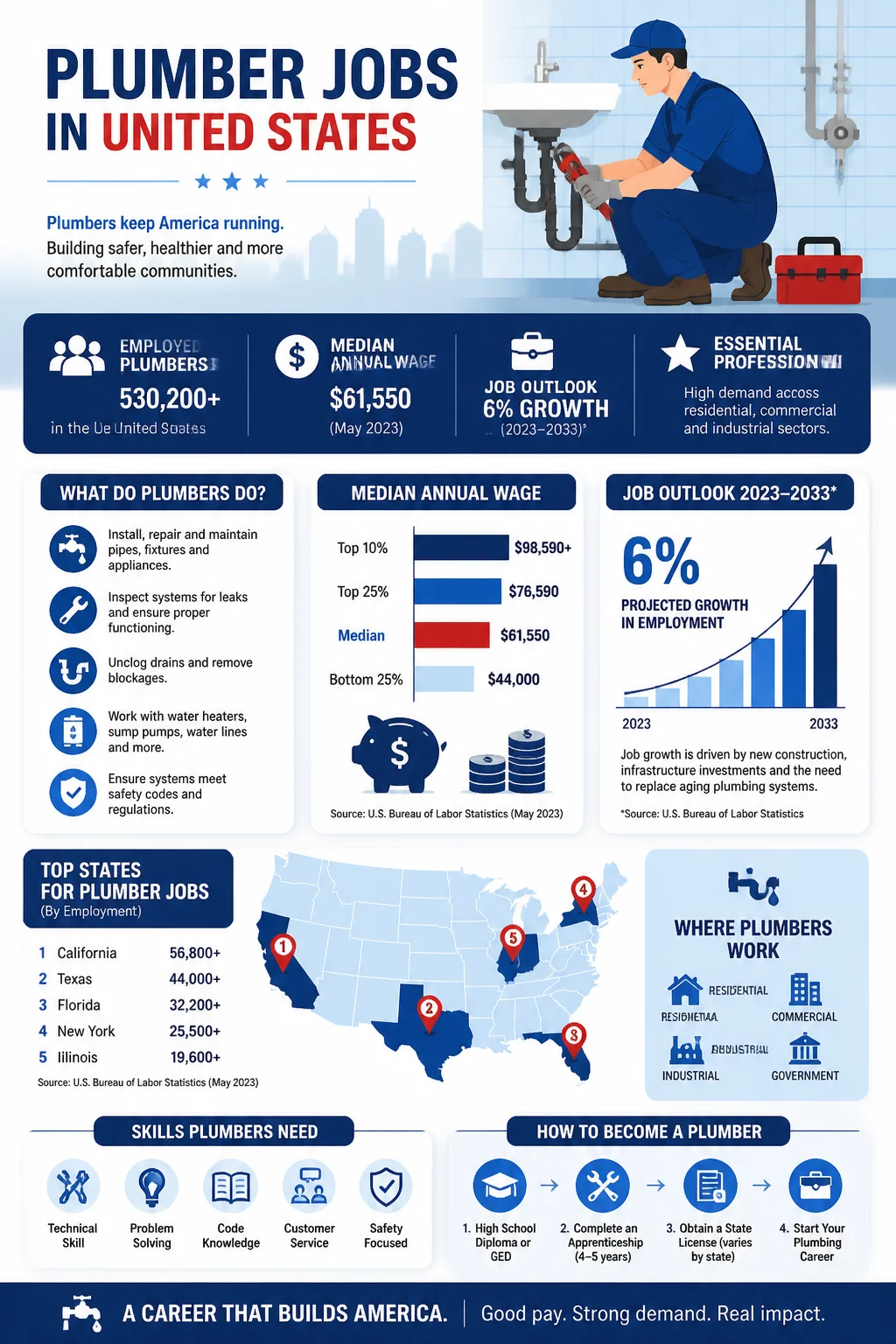
Look, you don't need a college degree. A high school diploma or GED gets you in the door. Then you chase that license. Each state has its own rules but passing the exam after enough hours worked is the big step. Once you got it, doors open.
- Residential service work pays steady with lots of overtime chances
- Commercial jobs can mean bigger projects but more travel
- Industrial roles often come with benefits and less emergency calls
Honestly speaking, the shortage of skilled plumbers means companies are hiring like crazy. From my experience in the trades, good workers don't stay on the bench long.
Best spots for these gigs right now
Texas keeps growing fast so new builds need plumbers constantly. Florida's the same with all the housing going up. But don't sleep on the Midwest either - places like Ohio and Indiana got steady factory and home work without the crazy housing prices.
Big difference comes when you factor in licensing. Some states let you work with just a journeyman card while others want master level quick. Check local regs before you move.
And the hours? Service calls mean nights and weekends sometimes. New construction sticks closer to regular shifts. Depends what fits your life.
Daily reality check
It's physical. Crawling under houses, lifting heavy stuff, dealing with whatever mess the last guy left. Not glamorous but you finish the day knowing you fixed something real. Plus no desk staring.
Tools cost money upfront. A solid set runs a couple grand but you earn it back. Bosses usually supply the big stuff at first.
Weather hits you too. Outdoor jobs in winter suck. Summer heat does the same. But indoor service work stays consistent year round.
Real talk, customer service matters more than people admit. You show up on time, explain things simple, and folks call you again. That's how you build your own route and skip the boss eventually.
Money and moving up
Starting helpers make maybe fifteen an hour. After license and a few years, forty plus isn't rare. Overtime during busy seasons adds up quick. Some plumbers clear eighty grand a year without owning the company.
Own your truck and you can go independent. That route takes time though. Insurance and marketing become your problem then.
Side note - union jobs often include pension and health stuff that's hard to beat elsewhere. Non-union can mean higher take-home but you handle benefits yourself.
Wherever you land, demand stays high because houses and buildings keep needing work. People always flush toilets and run water.